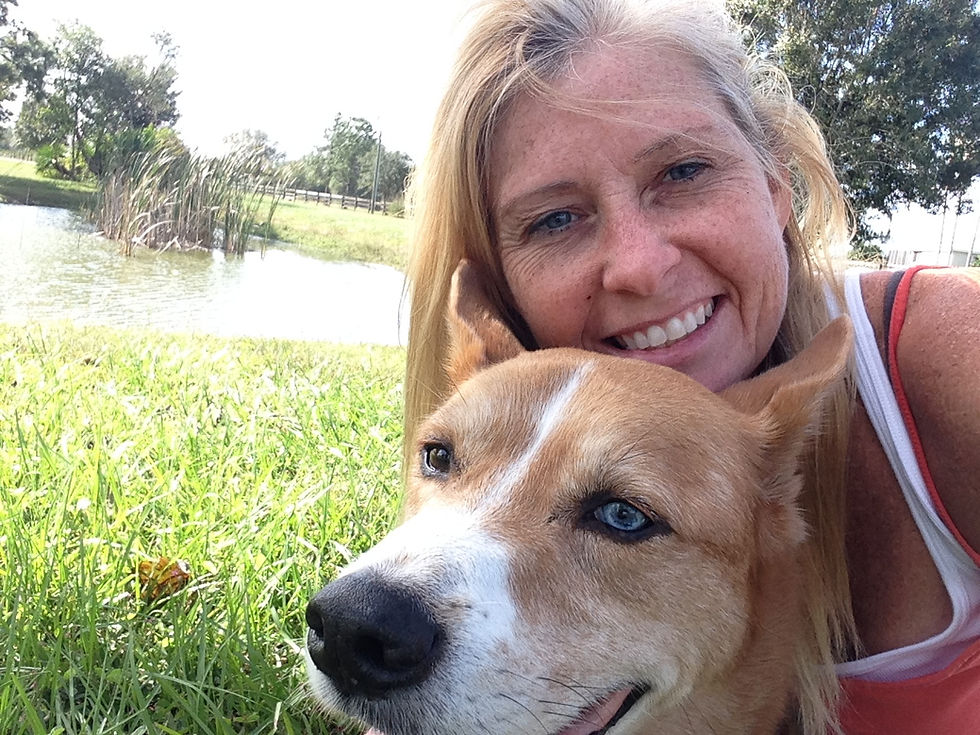
Marion Elizabeth
Yoga in Small Spaces
Yoga in Small Spaces is a project that entails content across multi-media platforms. The concept outlines the inclusion of balance and body awareness into every day movements.

As we travel through our lives, we are without a doubt a product of our upbringing and the environment with which that happens. Knowing that we move forward into the world from this platform, it is notable that we are inclined to continue acting similarly, until an event enters our journey. The new course of our journey ends up being a watershed moment that influences where we go next. Take for instance, an injury to our body, the only conveyance that gets us through the world from birth to the end of our timeline. Any sort of injury carries with it a certain amount of energy, whether it is physical or emotional, and until addressed, that injury can fester in our bodies and manifest itself in any number of ways. Our bodies hold tightly to trauma and that will be with us for the days to come. What we can do to keep the pain or continued injury at bay is a brand of self-care that we aren't necessarily schooled in. Sure, we are told to stretch before and after physical activity, and there are visions of a few scant seconds spent performing some half-hearted bending of the muscle groups associated with the limbs, but there is much more to it, and that is where the idea of the material in this book stems from. One of my co-workers jokingly quipped to me one day that I have probably figured out a way to do P90X in the car on the way to work. For anyone unfamiliar with the home exercise program that broke out in the early 2000s, it combined weight training with body weight resistance and kept you moving in a cross-training manner, while working all the muscle groups over the course of a six to seven day period. Highly effective over a 90 day period when combined with the suggested food plan, but not really something that can be accomplished in the car. The complimentary statement got me thinking however, and I considered what can be accomplished on a commute, and that branched out into how to utilize pockets of both time and space in which to can give attention to your body, mind, or spirit. Initially you might think this is impossible, but think back on the days we all sat in student desks and either watched fellow classmates twist from side to side in their desks in successful attempts to “crack” their backs, or you might have even done this little trick yourself. Using the resistance of the edge of the laminate wood-grained desk to push against and aid your body in creating space between your vertebrae to push out air bubbles and thus alleviating mild discomfort in your spine illustrates the concept presented in this book. Start taking notice of the confines in which our bodies are tethered throughout the day. The office chairs we sit in at our desks, the kitchens in which we prepare our food, car seats we slide in and out of to transport us to and from our many destinations, and even the act of pushing a lawn mower back and forth across the backyard; these are all opportunities to bring mindful thoughts into the action of our physical bodies. The more you hone the movements, whether static or fluid, the better we enhance the skill of conveying our bodies throughout our lives. Since we are going to be with our bodies for at least what we hope to be quite some time, doesn't it stand to reason we want it in the best shape we can get it? I am not talking about being “buff”, or having sinewy muscles, I am merely talking about going about our day-to-day business without pain or limitations as we move through our day. Think about any injury you have ever had in your lifetime, that brought focus to that pain, prevented you from moving as you normally would, and how as you age, other muscle groups get thrown out of whack because of the altered condition your body has to move to accommodate the injured area. I learned the art of skateboarding with my soul companion, who happened to be an amazing dog, who loved to move and had unlimited energy. Learning with him was like having a self-propelled motor and while holding his leash, it was imperative to keep the leash taught. I had stability from my core and could focus on how to keep my knees bent, my shoulders rolled back and down, and my core held in. Maintaining a taught leash was like having training wheels that you would have on a bicycle. It helps you get your bearings, so that eventually you get the hang of it to navigate sidewalks and driveways all on your own. These moving cogs working together give results to achieve the skill. In order to maintain the integrity of skateboarding, there can be no loose connections, or you and the pavement will become fast friends. My sweet Valentino loved to run, as he was a mix of Basenji and Husky, so imagine his delight as we went moving down an incline on the bike path. As this was my first outing, I was not quite prepared to be hurtling down this slope, no matter how minimal it was; it had me balancing and trying to maintain an upright position. See where this is going? I got nervous and leaned too far back to attempt to slow him down, but I ended up on the pavement with a metal water bottle jabbing my back from inside my backpack. Oh boy did that hurt, and it continued to elicit pain over the next week or so as I breathed in, lifted weights in body pump class, or even turned the steering wheel of my car. I wondered as I drove to work in the early morning if I would get pulled over by an officer if he wondered at my sudden swerve as I involuntarily reacted to the shooting pain in my back. I never was pulled over, but I started to use the slow travel of 30 mph to use my current location in the car to help stretch from the point of contention in my back. If I used the resistance of hands at 10 and 2 on the steering wheel, and push into them as I traveled a straight road, while I purposefully pushed down in the bucket seat with my buttocks, the rest of my torso could extend in the opposite directions from the injury on the right side of my mid-back. I breathed in deeply and allowed a slow exhale as I pressed into the back of the seat, which helped the tight fibers of my muscle groups struggling to unfurl their protective blockade around the injury. I will highlight the “point of contention” throughout, so be aware the body does it's best to protect injured areas by clamping down on the spot so that no additional movement enters to exacerbate the area. Think of it as a detour until repairs have been made. You wouldn't drive down a road that has been graded down in order for repaving to restore the road for smooth driving, and your body puts down a series of orange cones to divert movement until muscle and ligaments can again work in tandem without stretching the injured party past it's limit. Well, what if we were able to heal an injury by sitting with ourselves and taking time to stretch elements away from the blockage of energy around the area eliciting the most pain. As a release in tension unravels the knots tied up in blockading any unforeseen danger from harming the trauma location further, it is possible to heal and strengthen the injured area. Imagine if you were so practiced in initiating focus towards injury harness the energy flow so that throughout every muscle, ligament, and sinew of the body energy was efficiently flowing? Take the idea of old school cooking or baking from scratch. I used to watch my grandmother in the kitchen preparing food for the family, and she was very meticulous, especially when it came to putting ingredients together for any sort of baking, and frequently she made homemade bread. It is important to measure ingredients out to a tee for baking, but I'm most certain she did the same even when making any dish. I watched her sift flour over wax paper, squeezing the trigger handle over and over, like the gentle tick of the metronome, while tapping the other side of the sifter with the heal of her other hand, tilting it this way and that. Once she thought there was at least a cup, my grandmother picked up the sides of the wax paper and let it slide into the measuring cup, and if there was too much, one swipe of a butter knife off the top eliminated the extra, and tamped down the necessary amount. The measured steps she made always turned into a fantastic meal for the family, and it is with the care and effort she put in to each dish or loaf of bread that adds to the taste. No, it's not something you can particularly put your finger on, but there is definitely something better about a home-cooked meal when time and effort are put into the making. I believe the meticulous effort is why it tastes better, rather than a meal that is cooked for the masses, or a preserved frozen concoction that you warm up in the microwave. At one time the recipe was probably a family favorite that was marketed for the masses, but the large level creation doesn't have the same care stirred in. Now in applying this concept to your body's movements throughout the day, keep in the forefront of your mind that bending and flexing one's limbs mindfully achieve much improved motion that will serve you for years to come.
Listening to your body and acting accordingly is not necessarily taught to us, so we are left in the dark as to how to interpret the communication between your brain and your body.